How a contractor-readable septic request is different
A strong septic request gives enough context for the first review. Instead of asking for a generic price, it explains the symptom, property location, access conditions, urgency, and what the homeowner already knows. This matters in Fort Mill, Tega Cay, Indian Land, Catawba, Van Wyck, and Richburg because lots vary widely. Some homes have steep yards, narrow gates, older tanks without risers, wooded drain fields, lake-influenced drainage, clay-heavy soil, or long rural driveways.
Contractor-readable does not mean the problem is already solved. It means the request contains useful facts. For example, “two bathrooms are slow, the toilet gurgles when laundry drains, last pumped three years ago, no wet spots outside, located near Indian Land” gives more direction than “drains bad.” Likewise, “strong odor near the drain field after rain, no indoor backup, wet strip over field, photos available” points toward a different review path.
Good requests also avoid over-prescribing the solution. A homeowner may think pumping is required, but repeated backups soon after pumping can indicate a deeper issue. A homeowner may think the tank failed, while the field or outlet line may need review. The safest wording is to describe symptoms and ask for the correct evaluation path.
How to describe the problem so the first review is useful
Many septic calls start with one sentence: the yard smells, drains are slow, the toilet gurgles, or the system needs service. That is understandable during a stressful situation, but it can make the first response slower because the reviewer has to ask basic triage questions. A better request explains the symptom pattern in plain language. State whether the issue is inside the house, outside in the yard, near the tank, near the drain field, or tied to an alarm panel. Mention whether it happens every day or only after laundry, showers, guests, storms, irrigation, or heavy water use. If the problem improved after pumping and then came back quickly, say that clearly because recurring symptoms after a pump-out can suggest line, outlet, pump, or drain-field concerns instead of simple fullness.
Also explain what has not happened. If there is no indoor backup, no visible wastewater, no alarm, or no odor inside the house, those negatives help narrow the next question. If only one sink is slow while the rest of the home drains normally, that may sound different from two bathrooms, laundry, and tubs all slowing together. If the wet area appears only after rain, stormwater or grading may need to be considered along with septic absorption. If the wet area appears after normal water use during dry weather, that is a different clue. The point is not to diagnose the system yourself; the point is to make the request complete enough that a professional can choose the right visit type, equipment, and urgency level.
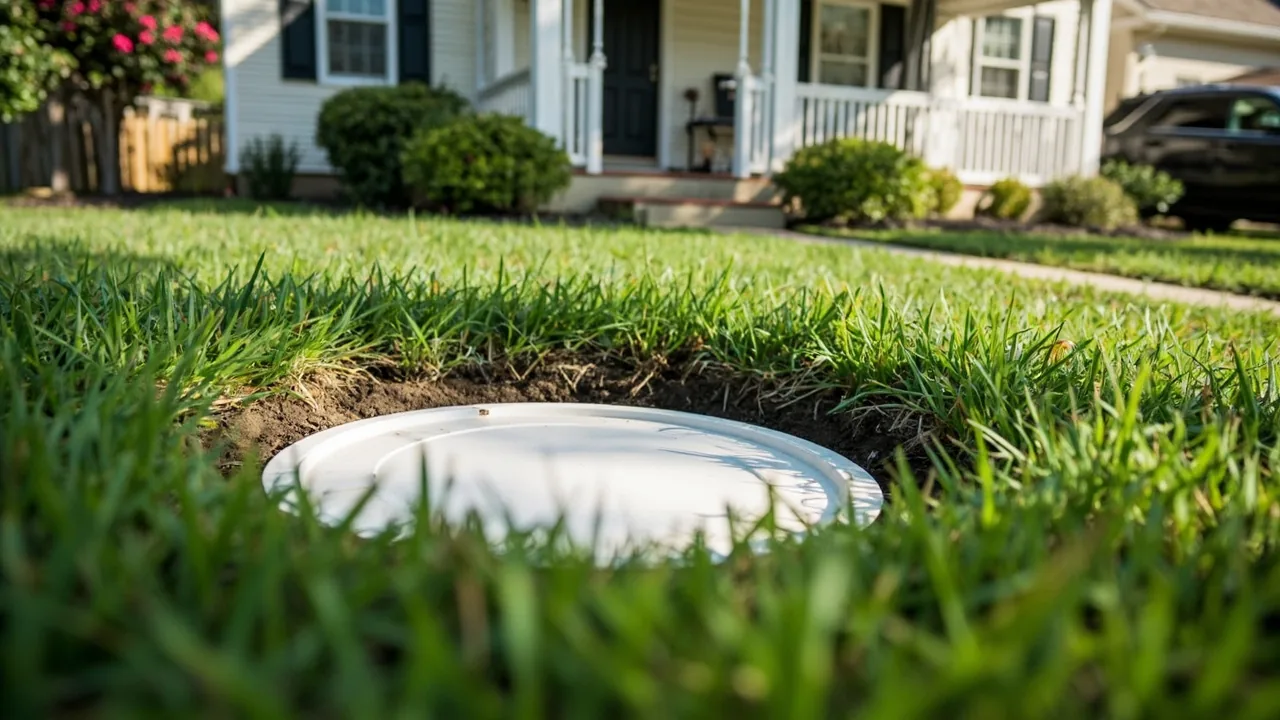
For Fort Mill-area homes, access details are especially helpful. Note whether lids are exposed or buried, whether the yard has a fence or locked gate, whether pets must be secured, whether there is room for a truck, and whether landscaping, patios, or driveways cover possible tank or line locations. Older homes may have limited records. Newer subdivisions may have clearer permits but tighter access. Rural properties near Catawba, Van Wyck, or Richburg may need directions to the tank, field, or driveway entrance. Lake-area and fast-growth neighborhoods may have drainage conditions that complicate the symptom picture. These practical details can save back-and-forth and reduce the chance that the first visit is missing key context.
Finally, keep the request safe and factual. Do not open a septic tank, enter a pit, lift heavy lids, or dig near unknown lines. Do not claim the field has failed or the tank must be replaced unless a prior inspection already documented it. Use cautious wording such as “possible drain-field issue,” “odor near the tank,” “multiple slow drains,” or “wet area over the field.” Include photos only when they can be taken from a safe distance. A clear, safety-first description gives the responding provider a better starting point while leaving the actual diagnosis and repair scope to an on-site evaluation.
Fast quote path for Irrigation Repair Indian Land Sc in Fort Mill, SC
Quick answer: If you searched for irrigation repair indian land sc around Fort Mill, use this page to send symptoms, wet-yard photos, fixture backup details, odor, last pump date, system type, tank/cleanout location, inspection deadline, ZIP code, and access constraints so the request is clear enough for quote routing.
Why this page was selected: GSC shows 2 impressions, 0 clicks, and best average position 82.5 for this cluster. The factory prioritizes near-click, commercial-intent pages before creating more low-signal content.
Urgency signals: Move faster when sewage backs up, several fixtures drain slowly, a yard stays wet or smells, alarms sound, pumping did not solve it, or a sale/inspection deadline is pending.
What to send first: symptoms, wet-yard photos, fixture backup details, odor, last pump date, system type, tank/cleanout location, inspection deadline, ZIP code, and access constraints.
How this helps the homeowner: instead of asking a contractor to diagnose a vague problem, the page turns the search into a structured request: location, symptoms, safe photos, timing, access, and the decision the owner needs made. That makes the lead easier to answer and easier to sell later.
How this helps the portfolio: the page targets one intent cluster, links from the homepage, keeps a clean canonical URL, uses form-first routing, and avoids thin duplicate claims. The factory only adds or refreshes pages when GSC shows evidence of impressions or a near-click pocket.
Call path: no tracking number has been approved yet, so this page keeps the form-first route instead of publishing a fake phone CTA.
Related query cluster
- irrigation repair indian land sc — 2 impressions / avg pos 82.5
Claim-safety note: this page does not claim licensing, insurance coverage, reviews, guaranteed dispatch, or that a contractor has accepted the job. It exists to capture better quote-request details and route the lead.
Before you request help
This page is built for a homeowner or property manager who needs a clearer next step, not a generic article. The fastest useful request includes where the property is, what changed, what has already been tried, whether there is an inspection or closing deadline, and what photos can be safely shared.
For Fort Mill, SC searches, the goal is to separate urgent problems from comparison shopping. If the issue affects safety, access, active water, sewage, storm damage, or a real estate deadline, say that first. If you are comparing repair choices, include what options you are considering so the request can be routed properly.
Good first-message checklist
- Property city/ZIP and best callback number.
- Two or three safe photos from different angles.
- When the issue started and whether it is getting worse.
- Access notes, pets/gates/tenants, and timing constraints.
- Any inspection, HOA, insurance, or sale deadline.